Showing posts with label languages. Show all posts

Monday, July 11, 2011

La Tamborrada, Por Favor!

If you’re planning on visiting the lazy, laid back town of San Sebastian in Spain, you might need to take your ear plugs with you.

The town which is otherwise a sleepy town comes alive to the sound of a thousand beating drums on this day.
Yes, you read it right! Thousands of beating drums all day and night! Spain has always been known for its outrageous festivals. (Remember the La Tomatina!)

But this one just takes the cake!

The parade begins on the evening of 19th January at the Plaza de la Constitution and goes on till midnight the next day, in honor of their patron saint, the Donostia of San Sebastian. What you get to see is a parade of uniformed marchers through the streets of San Sebastian, beating on their drums. Loud, eh?

There is a brief break in the parade around dawn the next day. And we do mean brief. Lasts long enough for everyone to take a quick swig of brandy and a bite of churros. (Deep fried dough sweet snack dusted with sugar!)

Each team of marchers represents the various gastronomic societies of San Sebastian. We must tell you, it is a very intense competition!

The origin of this festival dates back to 1720, where rumor has it that a baker while filling barrels of water from a fountain began singing. A bunch of girls nearby began beating their own barrels as accompaniment.

That evolved into this marvelous festival you see today!

Learn more about Spanish culture and the language at SIFIL!


Friday, June 17, 2011

Prepping up for Prepositions!


So how do you like the English language so far? We sincerely hope that with all the help we provide you, it’s gotten easier.

Learning a new language is never easy but it’s a lot of fun! And while learning a new language, you must know the finer details about the language.

We’ve been talking about nouns, adjectives, articles, verbs etc for quite a while now. So today we’re going to look at prepositions.

What are prepositions?

Prepositions are words which are placed before nouns. They usually express a relation between 2 words. For example: “The book is on the desk.” Here, the 2 nouns are ‘book’ and ‘desk’. The relationship between the 2 is ‘on’.

To make it easier on you, let’s just say that prepositions specify:
  •     Direction: left, right, across, around etc
  •      Placement: behind, in front of, under, over, on, in, inside, beneath etc
  •      Time: during, in (as in, in time for the meeting), for, during, while etc
However, there are other important prepositions which you can understand only if you understand the context in which they are used. Let’s take a look at what we’re saying in detail.
  •  At: used in the context of age. For example: She learnt to ride a horse at 45!
  • About: used in context of topic. For example: We were just talking about you.
  • By/on: used in context of medium or method. For example: He got to the restaurant by train. OR He got to the temple by foot.
Now here is an exercise where you can test how well you understand prepositions:
  1.     _______ the picture, I can see a woman. 
  2.     The woman is sitting _______ a table.
  3.     She is sitting _______ a chair.
  4.      _______ the table are a laptop, paper, a calculator, two pens and a muffin.
  5.     The woman is looking _______ her laptop.
Learn more at ELTIS SIFIL today!

Wednesday, June 15, 2011

The Spanish Tomatina!


If you were in Spain, on the third Wednesday in August, you would witness the craziest, most bizarre tradition one could possibly see in Spain. Oh but wait, you might also be covered with tomatoes which are most likely to be flung on you from every which direction.

The Spanish tomato festival, known as the Tomatina, is a traditional festival, held in the Valencian town of Buñol, in which participants throw tomatoes at each other. It is held during the week of festivities at Buñol.
The first part of this sort was allowed to take place in 1950, by the council. People faced a few lows in making this event official, but finally, the Tomatina was sanctioned officially. 

Once this happened, people became very innovative with how they ‘launched’ their tomatoes. They began using water cannons and catapults. It also became common to fill the opponent’s fountains with tomatoes. In 1959, when the Tomatina was approved by the town due to local pressure, there was a rule which stated that the festivities can commence and should end, at the sound of a horn.

The festivities start at around 10am. The first event of this day is the "palo jabón", meaning greasy pole. The goal is to climb a greased pole with a ham on top. The second someone is able to drop the ham off the pole, the signal to begin the tomato fights is given. This usually happens at around 11 in the morning, and the chaos commences!

Tomatoes come in truck loads. Participants are encouraged to wear goggles and gloves. It is also essential that the tomatoes be crushed before throwing, so as to reduce the risk of injuries. The event end after exactly one hour, as the horn goes off again. The city is then hosed down by the fire trucks. Locals are provided with hoses, to get themselves cleaned as well.

This Spanish tradition has not only made it to international popularity, but it has also influenced other countries to inculcate similar traditions.

Click Here to learn Spanish at SIFIL now!

Sunday, May 29, 2011

Adjectives, anyone?


If you ever paid attention to yourself while speaking, you would realize that many words make up your sentence; nouns, articles, adjectives, pronouns, adverbs etc. We will take a look at each of them in due time. 
But today let’s take a look at adjectives!

Adjectives can simply be defined as words used to describe objects, places and people. Let’s take a look at 
a sentence to help you understand adjectives better.

“A beautiful garden of roses.”

Can you point out the adjective in this sentence? If you guessed ‘beautiful’, your guess was right!

Now let us ask you: How were you able to identify the adjective in the sentence above? It’s simple! You looked out for the word that described the garden of roses- beautiful.

Now that wasn’t so difficult, was it? A quick tip: While reading, always try to identify the adjective in the sentence and make a note of it. You should then try to use it in a sentence later yourself! Not only will this help you understand the English Language better, but it will also improve your vocabulary!

Who wouldn’t want that?

Here are a few sentences to help you understand adjectives better. Why don’t you try and identify the adjectives in the following sentences?

·         Rohan’s mother is a wise woman.
·         Children are innocent.
·         She has long, brown hair.
·         Sleeping early makes you feel fresh and alert in the morning.
·         The red apple is juicy and very tasty!

Have you enrolled yourself at ELTIS SIFIL’S English Course yet?

Friday, May 27, 2011

The Big Fat Indian Wedding

Everyone has varied opinions on weddings. Some love the little traditions and rituals that come with weddings. Some get bored sitting through the long ceremonies. Some are simply grateful for the food! Whatever a person’s opinion might be, one cannot argue with the fact that a wedding packages all the traditions and culture of a country in it.

Indian weddings, like in any other country, vary from state to state, even city to city. And each state brings with it a new tradition, a new ceremony.

A traditional Indian wedding, in its most basic form, consists of three phases. The pre-wedding ceremonies suck as the ‘mehndi’ and ‘sangeet’. These ceremonies build up to the wedding in a way. You’ll always hear brides saying they don’t really feel like they’re getting married until the day of their ‘mehndi’. The point of the pre-wedding rituals is to simply set the ball rolling. Families get together and have fun. Dance and music is an essential part of these festivities.

After the pre-wedding phase, comes the actual wedding day. The wedding day brings with it the ‘baraat’ that is, the groom’s side of the family being welcomed to the wedding venue by the bride’s family. The ‘varmaala’ stage of the wedding is the exchanging of garlands between the bride and groom. Towards the end of the wedding ceremonies one will see the ritual of ‘satphere’, that is the seven rounds around the fire by the bride and groom, each round; a vow between the two.

The third phase is that of the ‘kanyadan’ and the ‘vidaai’. The ‘kanyadan’ refers to the ritual wherein the father hands his daughter to her groom. The ‘vidaai’ is the sad part of the wedding, where the bride leaves behind her family, as she becomes the part of a new one.

Yes, the Indian wedding is full of small rituals. They’re the key to a memorable wedding!

Click Here to enroll at SIFIL and learn a new language!

Thursday, May 19, 2011

Yummy in your tummy!


A new place means a new cuisine, no?

But it is hardly like that these days. Of course, the authenticity of a country’s cuisine comes only when you’re having their food in their country. Pizzas are better eaten in Italy, and tacos are best enjoyed in Mexico, but that said, most countries have gone the multi-cuisine way and serve food from all over the world.
Pune for instance has restaurants which are dedicated to serving foreign cuisines. One will find Italian, Thai, Greek, Chinese, Mexican, and also multi-cuisine restaurants. Not only does Pune see restaurants serving food from other countries, but also, it has some excellent places serving food from other states. North Indian and South Indian food is served at large, and if provided you know the right place, the food is brilliant.

The best way to learn about a country is to immerse yourself in its culture, music, history, art and most importantly, its cuisine. If you ever stepped into a traditional Maharashtrian household, you will be served the ‘kanda poha’ with tea. North Indians will make sure you’re stuffed with two bites of their ‘samosas’, and they’ll make it a point to hold you down for dinner too (let’s just say, they are generous with the quantities they serve). A south Indian house hold cannot welcome you without steamy ‘idlis’ and ‘chuttney’. In the far out east, the Bengalis quite enjoy treating their fish as the part of a vegetarian meal. They are also known for their delicious sweets.

Imagine having all these delicacies in one city. Did you think of Pune? Once in Pune, you need not travel all around the country to try out the dishes they serve. You’ll get it all, right here.
So, come take a bite of exquisite Indian and international cuisines here in Pune!

Click here to enroll at SIFIL while you indulge in mouth watering delicacies from all over India!

Monday, May 16, 2011

Pune- Largest hub for German companies in India


Pune has established itself as the centre for German companies to set camp in. As per statistics, Pune is home to 197 wholly-German owned companies. Also, Pune has established in it, over 200 Indo-German joint ventures. Further, over 80 local companies are doing business with German companies.

It’s safe to say the Indo-German Chamber of Commerce (IGCC) is doing a superb job at integrating German and Pune-based business. The IGCC, which was established a mere two years ago, has organized many events such as the Oktoberfest to bring German business to India. Such events give the firms a platform to present ideas and views on business, hence promoting the idea of collaborating businesses. Moreover, the IGCC has given the local firms a chance to exhibit their products in Germany on several occasions.

What is interesting is that not only are German companies investing in India, but many small and big businesses are looking to invest in Germany as well. The reciprocal reaction is of course expected, and hugely appreciated by German firms. The emergence of Pune as an engineering and automotive hub has contributed largely to why German companies are attracted to investing in Pune.

These German companies bring with them huge opportunities for Indians, in terms of understanding new business methodologies, and the very obvious aspect of introducing jobs to the people. Jobs as translators are fast expanding. The pay is brilliant, and all that is really required is the expertise in a language. That’s what German companies are bringing to India. Job offers, foreign exchange, and business expansion opportunities.
This is one of the best breaks that India can get in terms of expanding its business prospects to Europe. Germany, with companies like Volkswagen, is a huge asset for Indian companies to do business with. After establishing a firm relation with one country after the other like so, there will be nothing that can stop India from reaching heights which are only imaginable as of now. The sky is the limit, no?

Click here to learn German right now!

Sunday, May 15, 2011

Re-acquaintance: The Western Culture, the Indian Style

India has always been under the influence of foreign nations. This could be meant in the literal sense from the time of independence, to a more superficial sense today, when India’s generation next is influenced by the way they dress, their lifestyle, or even their appreciation for more diverse cuisine.

The youth is of course highly influenced by the foreign culture. But by what are they influenced exactly?
If one is to look at the surface of it, the clothes, the music and the food is what one would notice. The dressing sense is getting more and more westernized. The music has gone from Bollywood music, to exploring rap, jazz, hip-hop and pop. Food is one of the older influences that countries have on each other. India serves food from Italy, Thailand, Mexico, China, and so many more countries. On a global perspective, Indian culture seems to have left a mark on other countries too. They’ve got out spices, yoga, and cuisine. Even Indian dances have become very popular abroad! Sports and entertainment too have always played a pivotal role in this globalised India.

A development however, is that through the Indian culture spreading rapidly in foreign countries, the youth is getting re-acquainted with these Indian ways. Is that really the ideal way to get through to the youth? No. Is it the worst way? Definitely not! In fact, it’s probably the most efficient way to get them to get back in touch with what they seem to have forgotten. More and more people are turning to Indian cuisine, because it’s been now known to have all the nutrients on the food pyramid. They are looking to take up Indian dance and music, because the rhythms are actually known to be healthy. These changes would not have come about with parents and grandparents trying to keep children aware of their roots. If they are under the foreign influence, and the foreign influence now means, just Indian culture with a wee bit of a foreign touch, it’s completely healthy. And the only foreign influence that comes to the more sensible youth is a kind of smartness in their approach to career and lifestyle, and this change is in good taste.

This shadow of foreign culture has a cons list too, but the pace at which the world is progressing; the cons can be sidelined at the moment. What one needs to ensure is that the pros are altered to a more Indian touch.
All in all, globalization in any form is only a plus point!

Also find out the roll languages play! Enroll with ELTIS-SIFILs language course today!

Thursday, February 10, 2011

On Your First Day.

Your first day at learning a new language will obviously be a little daunting. It is very natural to feel that way because its going to be an entirely different experience to be able to speak in a new tongue.

That is why learning a language is so much more different than learning any other course. While learning a new language, it is entirely natural to not understand or follow things clearly and make tons of mistakes. In the beginning, it is only normal that you do so.

In the initial stages of learning a new language, your mind is just about to start getting exposed to a completely different sound and rhythm system . However, the human mind is so amazing, slowly you’ll see that you can make sense of a bit of what you hear on the first day of your class!
The main thing to remember before learning a new language is to have an open mind and keep practicing as much as possible. You’ll never regret it!

Enroll yourself at ELTIS-SIFIL today and learn a new language!

Tuesday, February 8, 2011

Turn Those Bad Habits Around!

One of the tricks that language student needs to eventually master is the art of developing and turning a certain study plan into a proper habit. Once it becomes a habit, it is really hard to get rid of. Therefore, instead of associating the word ‘habit’ with a lot of negative aspects, you turn it around by implementing a good study ‘habit’. It should be something like how you brush your teeth every morning without giving it a second thought. It’s a motorized action. This is what you need to turn your study plan into – a motorized action.

There are ways in which you can turn all these into good habits. For example, if you have been slacking off on exercise, you can trick your mind by wearing your gym clothes the night before and then when your alarm rings the next morning, you feel motivated to go. The same way, a little bit of prior preparation helps a lot!

Plan beforehand what exactly you’re going to study the next day. This way, you don’t waste any time the next day trying to figure out what exactly it is that you need to do.

Start revising what you’re going to study the next day, a day before. This way, it gives you a heads up on what you’re going to do and it will give you a start up the following day. It’ll be much easier to relate to what you’ve already read. Thus, planning ahead is always beneficial. With languages, it’s harder to form a habit because you learn something new everyday. But when you plan a day in advance, it makes things much easier for you.

Start this good habit and enroll at ELTIS-SIFIL TODAY!

Monday, February 7, 2011

What You Shouldn't Do While Studying.

The previous post spoke about how effective it is to write down your study tasks for the day. In addition to writing down what you MUST do, it is also equally necessary to keep a tab on what you should NOT be doing. Therefore, construct a list of things that you simply should not do in order to keep your study routine smoothly flowing.

I’m pretty sure 90% of our study time gets wasted because of a variety of distractions that we find it extremely hard to avoid. We’re constantly checking our phones and try to resist calling our friends or messaging them about a juicy piece of gossip – this ends up distracting us to an extent where we never end up sticking to our study plan.

Another huge distraction is following your friend’s Twitter or Facebook updates and checking them every few minutes. This really messes with your routine and you end up sitting online for hours – the vocabulary test you have tomorrow, forgotten.

The only way you can cope with having the perfect balance between social interaction and religious study time, is by making sure that you make a list of what you should NOT be doing during study hours. Thus, everytime you find yourself cheating during study hours, you’ll end up feeling bad about it and get back to studying.

Trust me, it works!

Help yourself study better and ace ELTIS – SIFIL’s language courses starting on the 22nd of February.

Friday, February 4, 2011

Help Yourself Study!

To be able to manage all the other miscellaneous things that you do along with your study routine, theres a solution to that too! For example, if you need to check your e-mail, watch TV or talk on the phone with a friend at least few times in a day, it is possible to do ALL of that as well as making sure you stick to your study plan! This way, you don’t feel too pressured. You can pick a specific time to check your e-mail – it can be for an hour. Tell yourself about how you can spend time checking your e-mail only from 1pm-2pm.At 2pm, no matter what happens, pry yourself away from the computer screen and continue studying. Not only will you feel better that you got back to studying again, but also will not worry about checking your e-mail for the rest of the day!

If you don’t map out a concrete schedule like so, you’ll end up checking your mail or sitting online everytime you feel like taking a break and you’ll find it too hard to stop after an hour. This way, you trick your brain into believing that this routine is a habit. A habit is merely the mechanical sensors of your brain telling you what to do. This way, you’ll end up doing it often without even thinking because it will start functioning as a habit!

Start this helpful routine and enjoy studying at ELTIS-SIFIL!

Thursday, February 3, 2011

Put It In Writing!

I hope all of you that were facing problems when it came to getting down and studying embraced the little suggestion that I had in the previous post. If it didn’t work, no problem – I have another one I’d like to share. This method has proven to really help me out every time I have felt like I simply cannot urge myself to study. Often, when you don’t revise the language every single day, the amount you have to study just keeps piling up and before you know it, you’re in big trouble.

I always keep a journal where I write down everything that I exactly plan on doing or would like to finish in a day or in an evening. Writing on a piece of paper rather than typing something out always helps much more because writing it by hand sort of confirms it and makes it solid that you absolutely HAVE to revise the vocabulary of at least 20 words in a particular amount of time. This way, you don’t end up wasting an entire day JUST doing 20 words and can quickly finish whatever you have allotted yourself for the day and have the rest of the time to yourself!

This is an extremely useful trick. The more specific you get, the better. Allot yourself an hour’s time and a 15 minute break in between and I’m pretty sure at the end of that hour, you’ll know those 20 words by heart. The accomplishment of finally finishing what you had scheduled for the day will make you feel great about yourself and you will look forward to studying as per your routine the next time.

Hope you all ace the language courses at ELTIS-SIFIL!

Tuesday, February 1, 2011

Get Down To Studying!

People often break their head when it comes to really getting down and studying a new language that they are learning. When you begin studying a new language, making sure that you devote at least an hour and a half to it everyday, is absolutely crucial.

The trick to making sure that you stick to your study routine. That, is where we all fail. There are a number of ways that you can prepare your mind to follow your study plan diligently.
The first thing to do, would be to have action associations. Have you ever wondered why you end up doing certain things – like going to gym only when you’re home and not when you’re staying over at a cousin’s place? This only happens because you associate certain things around you with the fact that you need to hit the gym or go for a run – like when you see your track pants, or your shoes!

Thus, in order to help you study regularly and constantly having it at the back of your mind, would be using these very action associations. You could make sure that a certain area in your room is the area where you ONLY study that language. Or, you play a certain genre of music ONLY while studying it – classical instrumental music ALWAYS works!

Give it a go. Soon, where you glance at that area of your room, you’ll feel a tug at the back of your brain, urging you to study! I’m sure it’ll help you ace the language! More tips coming in the next post!

Have you enrolled at ELTIS-SIFIL yet?

Friday, January 28, 2011

慢慢吃! (mànmàn chī!)

Chinese cuisine has been adapted by a number of places in the world. These places have all developed their own versions of the cuisine. You’ll find that the cuisine has evolved into American chinese cuisine as well as Indian chinese cuisine which a great examples.

Rice is one of the major food sources in China. Noodles, too is something we all associate highly with China. Noodles have a symbolic meaning in China – The long length are supposed to signify the a long and healthy life. They come in different textures and shapes and are used as a main course or as fried toppings or put in soups. Tofu, too is seen a lot in Chinese cuisine. It is very versatile and is often used as a meat or cheese substitute. It is affordable too and has high protein content.

Dim Sums or ‘small snacks’ are either fried, steamed or stewed and stuffed with a varitey of things. Most chinese dishes are always paired with tea. China was one of the first places to cultivate and drink tea. There are several categories of tea – green tea being most popular with the Chinese. It is also known for its wonderful health benefits.

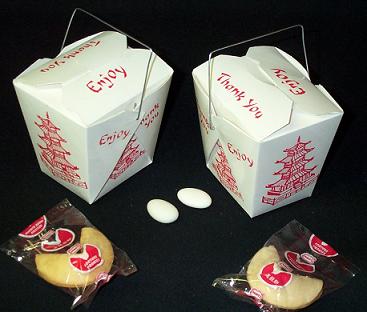
The most popular chinese dishes are Kung Pao Chicken – although this dish has been highly americanized, it hails from the Siachun province and is diced chicken with vegetables, peanuts and chili peppers. Spring rolls or egg rolls – these are very popular in India too and are either deep fried or freshly wrapped in rice noodles filled with vegetables and meat. Mushu pork – this is stir fried pork that has been wrapped in pancakes and garnished with hoisin sauce and scallions. Fried rice – this is by far the most popular item on every Chinese restaurant. It was a dish that Chinese housewives traditionally started making from left overs from the previous night and consists of egg, meat and vegetables. Beef with brocolli – this consists of stir fried beef steak with a rich sauce and brocolli. Hot and sour soup –an ever popular starter, is a broth that is a combination of both sweet, salty and sour and lastly Beef fried noodles, which are one of the most popular street food in China. It traditionally consists of pork but is served with beef and chicken too.

SIFIL-ELTIS’ Chinese language bacth starts in less than a month! The 22nd of February. Be different! Have an edge! Go learn a new language! :)

汉语/漢語

CHINA
Capital – Beijing
Population - 1,338,612,968
Currency – Chinese Yuan
Religion – Buddhism and Taoism.

One fifth of the world’s population speaks at least some form of Chinese. Spoken Chinese has various kinds of dialects – just like the verbal form of most languages. Verbally, the language differs in its tone and analytics. The most spoken regional groups of Chinese are Mandarin, Wu and Cantonese. Standard Chinese, which basically is Mandarin, is the official language.

There are currently two systems for the Chinese language which is still used in most Chinese speaking communities and the Simplified Chinese character system which was developed in China itself to promote mass literacy.

Korean and Japanese have both taken writing systems from Chinese – Hanja and Kanji. Fifty percent of the Korean language is of Chinese origin. One single word can mean five different things. How you say it and the tone you use while saying the word determines which word you mean.

The Chinese Language has very few grammatical inflections. It has no tenses, voices or even numbers! Grammar is used heavily to indicate mood.

Mandarin has gained an amazing amount of popularity over the years. Mandarin translators are in high demand and are also valued in most major Chinese enterprises

SIFIL-ELTIS starts Chinese language classes on the 22nd of February. I bet many of you have wanted to do something completely different this year. Go learn Chinese! :)

Wednesday, January 26, 2011

Parlez Vous Française?

FRANCE
Capital - Paris
Currency - Euro
Population - 65,821,885
Religion - Roman Catholicism


500 million people worldwide speak French as either a first, second or foreign language. French has been derived from Latin (essentially, vulgar Latin.) The nasal sound in theFrench language plays a huge part in the phonology. It is the official language in 30 countries .

French is the second most common language in Canada and the official language in Quebec. The difference between the French spoken in Quebec and the french spoken in France is similar to American english and British English.

The language is written using the 26 letters of the Latin alphabet with the four diatrics or accents appearing on the vowels. French spelling is extremely difficult to try and spell depending on the sound - something, we often do in English.

Learning a language like French, which is spoken in so many continents, will help you immensely when it comes to job selections as well as embracing the culture and tradition of various places. Surprisingly, it can also help you improve on your english vocabulary as over 40% of French words have been derived from the english language. Your proficiency in French will also improve your grammar skills and give you a huge advantage over a lot of people.

France is also one of the most visited places in the world. The language is so smooth and has always been categorized as romantic. Isn’t that encouragement enough to start learning?

SIFIL-ELTIS is going to conduct a French Language batch from the 22nd of February. Enroll today and show off your smooth French accents!

Monday, January 24, 2011

Guten Appetit!

Germany is known as das Land der Dichter und Denker which means the land of the poets and the thinkers. Cinema, poetry and philosophy is held in really high regard when it comes to German culture.

The Germans take a lot of pride in their homes and family and only invite those that are really close friends or relatives to their home. In fact, most shops and stores and shut over the weekend in Germany, so that the workers can be with their families. German culture boasts of a number of great figures in history that have contributed immensely to their culture. Goethe, Mozart , Beethoven and Einstein just about scrape the tip of the iceberg. This culture has so much more to offer.

The Germans are more of debaters rather than the contrary belief of them being too stereotypically stubborn. They love debating and arguing over things they don’t agree with and don’t find logic in.
The Germans are aware that their language is rapidly changing. Germany, like english, too absorbs a lot of things from different languages.

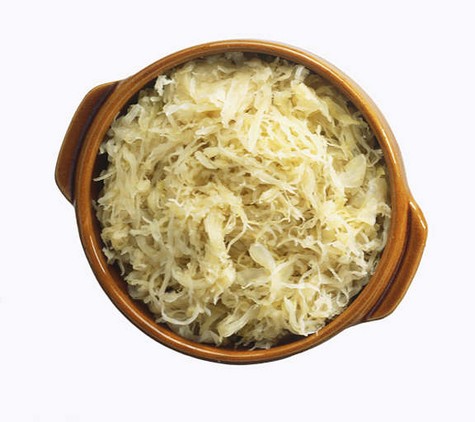
We all know that German cuisine would be incomplete without the sausages. Other than that, the most popular German dishes are Currywurst –which is a large fried or grilled sausage which is smothered with ketchup and curry powder and served with french fries.Königsberger Klopse is meatballs in a white sauce. Sauerbraten is a beef pot roast that has been marinated in vinegar, water and spices. Lastly, one of the most famous German dishes is Sauerkraut which is shredded and pickled cabbage.

Beer is considered to be the most popular drink all throughout Germany.

Enroll yourself for German classes at SIFIL-ELTIS for a slice of Deutschland!

Deutsche

Germany
Capital – Berlin
Population - 81,757,600
Currency – Euro
Religion - Christianity


The German language is the most widely spoken language in the European union and is the third most taught language in the world! The Germans speak in very low undertones and the language often sounds a bit aggressive when spoken. However, the demand for those that can fluently converse in German, is very high. Job opportunities present themselves very often too!

Written German dates all the way back from the 8th century AD and had fragmented excerpts from the the Song of Hildebrand – a very famous poem.

German literature gained momentum around the 12th and 13th centuries in the form of romances and poems.
High German, which is a style of writing, which was used by Martin Luther’s translation of the bible was the base of when it was formed. Most of the language he used in his translation, was spoken German which eventually also became the basis of written German.

Low German, which is another style of writing and speaking is spoken in a completely different area and there are many variations between High German and Low German.

German is also the official language in Austria. Modern German was eventually created after years of modification in the grammar and vocabulary from various parts of Europe that speak German. The German language has a difference in the word order and largely uses inflections. The black gothic letters that we often used to see, in old manuscripts aren part of the Roman alphabet and is called Fraktur in German. It isn’t used anymore, but having a knowledge of Fraktur was extremely important in the past.

SIFIL ELTIS is starting a new German language session beginning on the 21st of February! Give yourself a taste of this wonderful language! Enroll soon!

Saturday, January 22, 2011

हिन्दी


Hindi is the official language in India. Hindi too is written in the Devanagri script as it is a Sanskrit register of the Khariboli dialect. There are a number of dialects found all over the country. Thus, the way of speaking and pronouncing words are different in various parts of the country. Often, one finds that the accents differ too. For example, a person in Mumbai and Delhi will have two different variations of Hindi. Certain words too are different. In Mumbai, it is “paani-puri”, but in Delhi it will be called “gol gappas” or “chuski”.

Learning Hindi, too has become immensely popular among foreigners. In order to be able to function in India, it is essential for a person to be able to speak Hindi fluently. Conversing with the locals becomes much easier and a communication gap does not arise. Over 500 million people speak Hindi and is the third most spoken language.

Hindi has a connection with Urdu as well. Linguistically, both Hindi and Urdu are very similar – even when it comes to grammar and vocabulary. The only difference is that Hindi has been derived from Sanskrit whereas Urdu has Persian roots. Before the partition, spoken Hindi and Urdu were considered to be the same language.

Learning Hindi, is very interesting if you love languages. The array of idioms that it possesses is really fun to learn. Speaking fluent Hindi has always been considered impressive and sophisticated.

SIFIL-ELTIS is offering Hindi language classes for a total duration of 60 hours and the frequency is twice a week. Enroll yourself today!